Towards the creation of innovative computing technologies
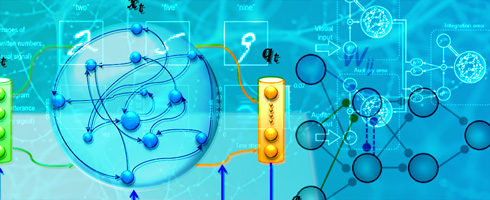
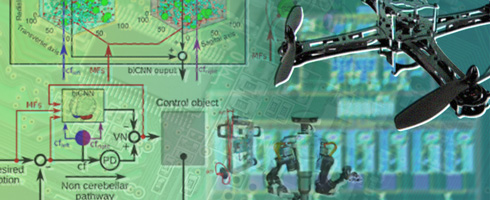
The human brain, despite being composed of the seemingly unstable biological elements known as neurons, demonstrates the ability to perform advanced information processing autonomously and adaptively with remarkable energy efficiency. Understanding the information processing architecture of the brain is a critical interdisciplinary challenge spanning biology, engineering, and information science. This Research Area aims to pioneer a new academic discipline to unravel the brain's information processing mechanisms through in vivo and in vitro experiments, formulate the findings in mathematical models, and explore their potential applications in systems applications. The achievements herein would deepen our understanding of the nervous system and also lead to a more efficient, robust, and adaptable information and communication technology that supports next-generation super-smart societies.
Build biointerface technologies (Tanii Team) to test the models formulated for normal (Yamamoto Team) and pathological (Hirano-Iwata Team) networks in living neurons.
Obtain physiological data on multicellular computing and underlying synaptic functions using in vivo calcium imaging (Masumizu Team) and electrophysiological recording (Kamiya Team).